Three years after the Student Advisory Council, abbreviated as the SAC, helped rework the Homeroom Release policy, students remain pondering about its effects on the school.
“It’s good!” exclaims Nevaeh Ottenhausen ‘26, who utilizes the effects of the policy frequently. Though, when she continues, she shares an opinion that many others also see eye to eye with: “I find it annoying how if you miss a day of school, you don’t have these privileges anymore.”
This type of mixed perspective on this newly developed approach to Homeroom Release has seen a boost in popularity in recent months. Cameron Einsweiler ‘26, another recurrent user of the policy, sympathizes with these concerns.
“My Sophomore year, I genuinely could not go to school from a surgery—I was not skipping school—and I got my homeroom release rescinded,” Einsweiler explained. “I’m not happy about that!”
Despite the feedback among students, it was their own population who voted positively to successfully pass this new rule. In fact, the SAC had played a role in being one of the ultimate voices in approving school-wide policies like this one—and this year, they’re looking to go even farther.
“The SAC was originally started as a way to get student voice in front of the school board,” said principal Mrs. Hawkins, who leads discussions at the council meetings. “But, it was helpful for me to have time with the group of students to get info about what is happening from a student perspective.”
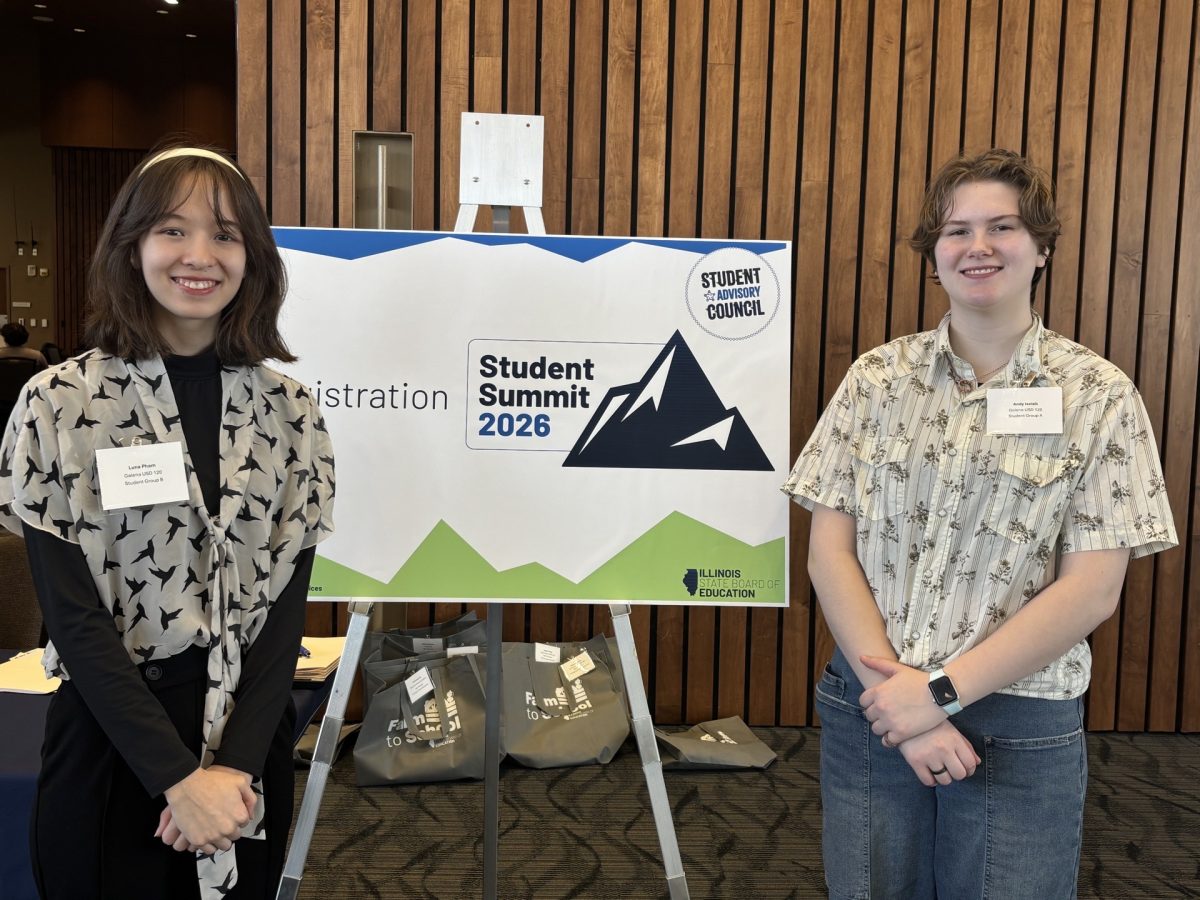
However, the influence the SAC has isn’t limited to just our schools: Luna Pham ‘27, who serves as a member of the Student Advisory Council at the Illinois Education and Career Success Network, says the larger, state-run organization “cares for the social aspects of school and how everyone is in a safe environment.”
“It covers so many schools: urban areas, rural areas, and more places where we ask what we can do to help seniors who are graduating, as well as give accessibility and perhaps make classes that weren’t there before,” says Pham, who involves herself locally with the Galena SAC. “It’s a place where people can talk and collaborate with a variety of school environments to try and figure out a solution to every problem.”
Locally, the impact the SAC has had on our schools has also proven to be extensive. In recent years, they have championed changes to the school such as the inaugural Special Olympics Polar Plunge that debuted last year, the Latin Honor System that was first implemented with the Class of ‘25, and a newly-updated Homeroom Release policy that—despite the ambivalence—have reduced student truancy from 18 to 11 percent.
In the words of Mrs. Hawkins, “What I appreciate about the SAC is that they get honest with me about certain issues and we have good, solutions-oriented conversations.”
Now, a newly composed council consisting of Student Board Member Violet Doyle ‘26 and members selected from every facet of the school environment are tackling a new problem: a school-wide cellphone ban currently circulating the Illinois government.
“A ban will be good for us because kids are too focused on their phones, and they need to communicate with each other,” vocalizes the Student Board Member-to-be Lex Abt ‘27, who will take on the role currently held by Doyle next year. However, he stands on one side of a growing division between whether phones should be allowed in the classroom.
On the other side, Pham stays defiant: “I’m not for it. Phones are very innovative, and I don’t think banning them outright will achieve what they are hoping for,” she says. “Especially in cases of emergencies.”
Agree or disagree, they must share their views on how to combat this soon-to-be-inevitable situation soon, during either monthly or bi-weekly meetings held in the teacher’s lounge. There, they will formulate an actionable plan backed by both the members and Mrs. Hawkins, and the Student Board Member—the second-highest position in the SAC behind Hawkins herself—will present their findings to the Board of Education.
For Doyle, the latest Student Board Member, she has already been making waves in and out of faculty settings as the latest holder of this role.
“It was definitely a little intimidating at first, but it’s such an interesting process to witness inside School Board Meetings,” says Doyle, who went through a comprehensive application process during the summer to obtain this prestigious role. She will now join only a handful of people—three, to be exact—who have held this position for its one-year term.
As part of her duty, Doyle attends separate meetings with Superintendent Mr. Vincent and School Board President Mrs. Stodden outside of general SAC conferences that precede a Board meeting. “There, we talk about the meeting agenda—what we’re going to discuss for that day—and I write a speech to say at each one of them.”
Aside from that, she, alongside everyone serving as a member of the Galena SAC, encourages everyone to get involved with the school and its policies. Because the Council needs to exhaustively represent the entire student body of GHS, most members of the group were selected privately, via nominations from teachers.
“We strongly consider the makeup of our organization, including people’s racial backgrounds, gender, interests, and whether they sit on the SAC for the state and have student calls with people to talk to the State Board,” Mrs. Hawkins explains.
Other members of the group’s population are automatically set to be a member of the SAC based on internal roles that they hold—including Student Body Presidents, Student Board Members, and multiple representatives from certain clubs including the FFA and Key Club.
Still, the application process to be a Student Board Member remains holistic. Abt and Doyle all responded to an email to apply for the position from Mr. Vincent, where they filled out a request containing a personal statement, list of extracurricular activities, and various forms and waited for an interview.
Despite the selectiveness of the organization, the SAC remains incredibly open to new members; ultimately, interest must be considered in whether or not one would obtain membership to the group.
As Mrs. Hawkins says, “If you show interest and want to be in the SAC, I can determine that you should be in the group.”